Weekend Update #187: Trying to Collapse the Russian Army from Behind--What to Watch out for.
Is Ukrainian Now A "Nordic" State?; Russia Attacks Romania

Hi All,
It has been fascinating watching the media catch up with the change of initiative in the war which began many months ago. Until not long ago, much of the media was talking about Ukraine having a manpower crisis compared to Russia and that during the coming period the Russians would maintain the initiative going forward. It was based on a widespread misunderstanding about what was happening (and shows how weak the reporting has been throughout).
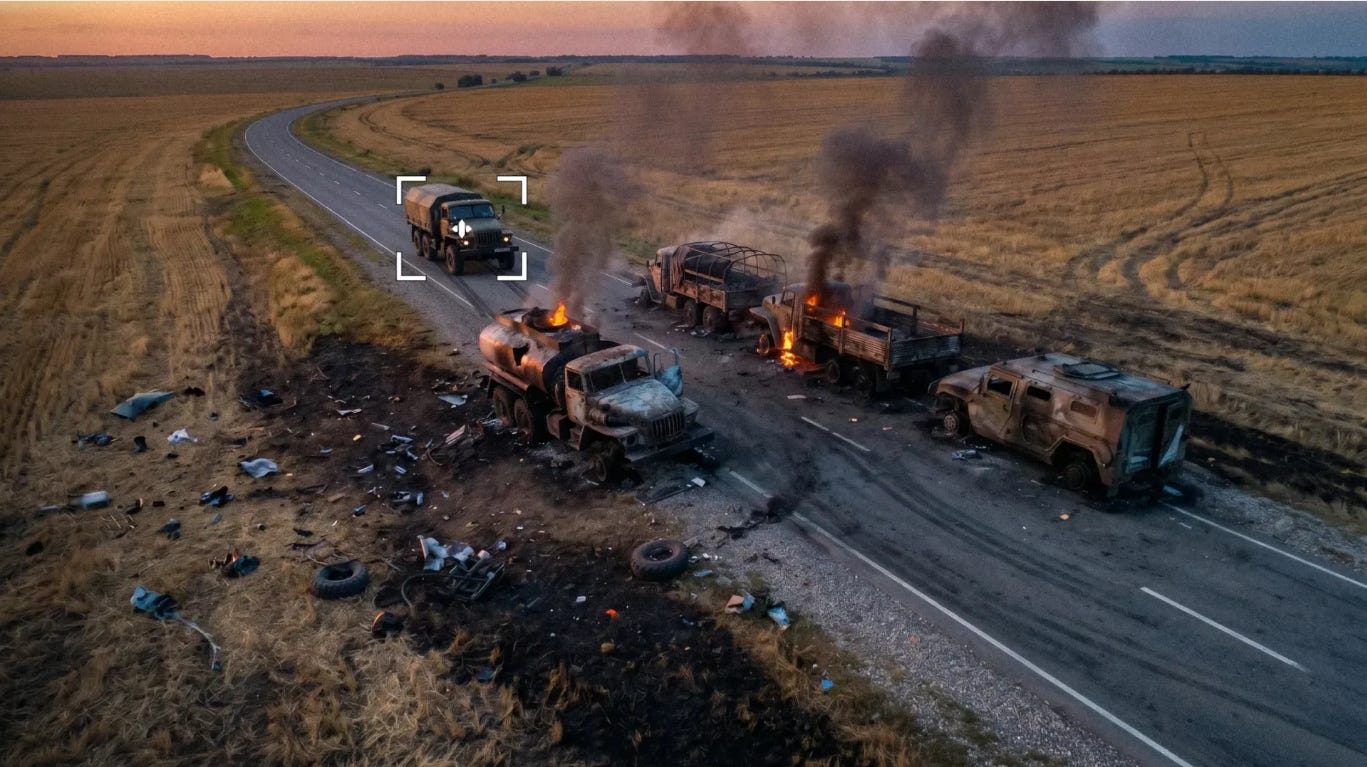
Ukraine did not somehow start plucking the initiative in the last few weeks out of thin air. The Ukrainians started planning for this change well over a year ago. In January and February I wrote two pieces on a victory strategy for Ukraine, and laid out what the Ukrainians were doing (and had been doing for a while). Here are the two pieces.


And here is an excerpt from the second one, which shows for just how long this plan was under development by the Ukrainians and how it was a strategy based on strength in both long and medium ranged capabilities.
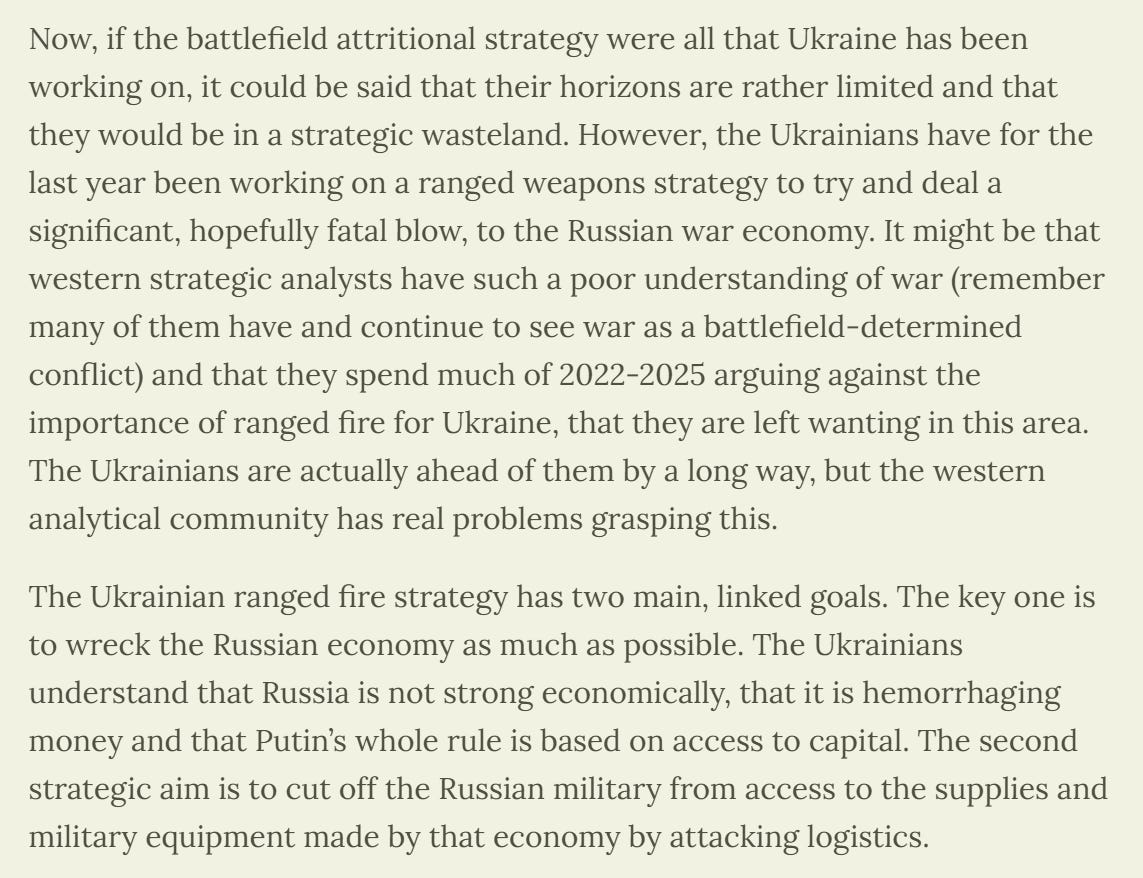
Look, I did not make this up. It was readily apparent from talking to and most importantly listening to Ukrainians. They could see the war changing in front of them and it was the Ukrainians who decided to adapt to that instead of banging their head against the wall and trying to fight in ways that they had earlier. That was the genesis of the combined long-range/medium range strike campaign we see now, along with the UAV attrition strategy on the battlefield (all three are mentioned in that excerpt above).
More and more there are signs that it is working (though I think people also need to keep expectations in check). As such, I thought I would start this week to talk about how the campaign might effect the Russian Army in the field and what to watch out for.
Two others stories will be mentioned. President Zelensky made a notable trip to Sweden this week, and as part of this one prominent voice started talking about Ukraine as a new-Nordic state. I think a Baltic-North Sea grouping is better, but I get what is being said. Finally, Russia launched what might have been a deliberate attack on a NATO state—and the NATO rhetoric was super in response. The alliance itself, though, is a zombie.
Trying to Collapse the Russian Army from Behind--What to Watch out for.
The Ukrainian claims of losses of Russian material and soldiers have been surprisingly accurate since the start of the Russian full scale invasion. Their claims of losses of Russian soldiers, for instance, seem to be widely confirmed by western intelligence agencies. Just two examples. In May, Dutch intelligence released an estimate of at least 1.2 million Russian casualties (approximately 500k killed). At the end of April a UK source claimed this figure was around 1.3 million. The Ukrainian tally released a few hours ago was just over 1.3 million (see below).
Interestingly, recent claims might even be more accurate because so many of the losses are being filmed by UAV. This makes this war not only the most transparent, it makes it gorily the most “trackable” conflict in human history. The deaths of Russian soldiers and the destruction of Russian equipment are now being filmed regularly.
When it comes to the collapsing of the Russian military from behind, the most immediate thing to pay attention to, as I discussed last week, is the mid-range strike campaign. Looking for evidence from that can be seen in Ukrainian claims. Take a look at this chart of Russian losses from yesterday and see what stands out.
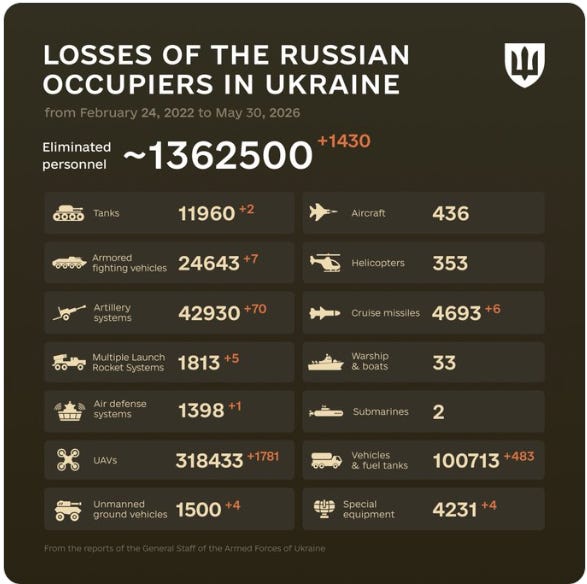
The figure of 1430 personnel is shocking though that is actually not the one I am talking about (more on personnel losses below). No, the one that is even more shocking is the 483 “vehicles and fuel tanks”. That is a daily record for the Ukrainians
And this week the focus on transport attacks has been made much more public by Ukraine. The Ukrainian MOD announced its ‘Logistics Lockdown’ program with an additional UAH 5 billion devoted for middle-strike capabilities. This was how they summarized it—and note how they said that this campaign has been going on (let alone planned for) for many months now.
Over the past several months, Ukraine has increased fourfold the destruction of enemy logistics, warehouses, equipment, vehicles, command posts, and supply routes at operational depth.
Data points to a clear trend: as the destruction of russian logistics increases, the number of assault operations along the line of contact decreases.
The data points that they mention are the interesting ones to track. See if the destruction of Russian trucks remains elevated in this way. You will also see reports (though often not comparative data) the destruction of warehouses and Russian command and control (C2) posts. Two days ago, the Ukrainians released statements about hitting both (see bolded text below).
In the occupied territories, an enemy Tor-M2 anti-aircraft missile system was hit in the area of the village of Berdianske, Zaporizhia region; an enemy command and observation post in the area of the village of Lyman Pershyi, Kharkiv region; an enemy logistics warehouse in the village of Aidar, Luhansk region; as well as enemy UAV command posts in the areas of the village of Tyotkino, Kursk region of Russia, the village of Komar, Donetsk region, and Nesterianka, Zaporizhia region.
Once again the Ukrainians are saying what they are doing. The Ukrainians are going for the trucks, warehouses and C2 posts—and add to that keeping the personnel losses for the Russians above replacement levels. That figure of 1430 personnel losses the other day, along with the truck losses is exactly what the Ukrainians want to see happen. The most important moment in this calculation, however will happen sometime next week when the Ukrainians release their monthly estimate of Russian losses for May and whether these are above new recruitment figures.
If it is, the trend is exactly what the Ukrainians are planning for. It will lead to a constant degradation of the Russian army and fighting power. Supplies will be decreasing, command will be chaotic, losses will be rising and replacements arriving in inadequate numbers. The remaining troops will be in worse shape and be asked to continue attacking. Along the line it will be the Russian military that will be increasingly closer to failure.
This, at least, is what the Ukrainians are saying. Take a Russian army that has to attack and collapse it from behind. The Ukrainians are not hiding their plans—hopefully the western press will not be so slow to understand it this time.
Is Ukrainian Now A “Nordic” State?
President Zelensky had one of his more notable international visits last week. He flew into Sweden, where a fascinating defense agreement was signed. The Swedes donated 16 earlier generation Gripen fighters to the Ukrainians (they should arrive in early 2027) and from that point the Ukrainians will go forward to buy many more. The original purchase order looks to be 20 of the most advanced generation of Gripens—with an eventual order of up to 150 being mooted.
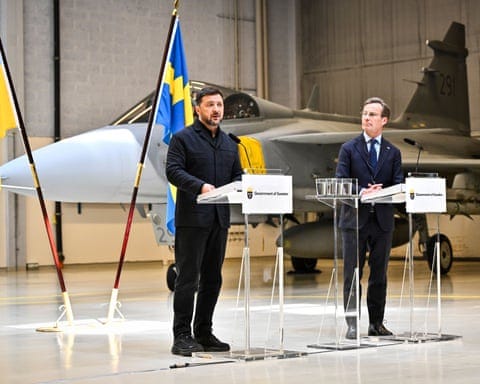
That would be a major growth in Ukrainian fixed wing capabilities—and just as important it will be European based. The Gripens were engineered by the Swedes specifically to fight the Russians, something that the Swedish PM referred to rather coyly—saying that they were built “for one thing”

Btw, as part of that tweet, Kristersson released a video you can access here.
This is only the latest of what has been a series of strong commitments to Ukrainian defense by the Nordic states (which include Norway, Sweden, Denmark and Finland). These states have gone far beyond most in their financial and military backing of Ukraine and, moreover, are more comfortable discussing Ukraine winning the war (and Russia losing). For reasons of history and location they are less squeamish on the subject than many others.
Former Ukrainian Foreign Minister Dmytro Kuleba even mused about whether this kind of connection (and the overall support Ukraine has received from Nordic countries) meant that Ukraine was becoming one of the Nordic states—strategically at least.
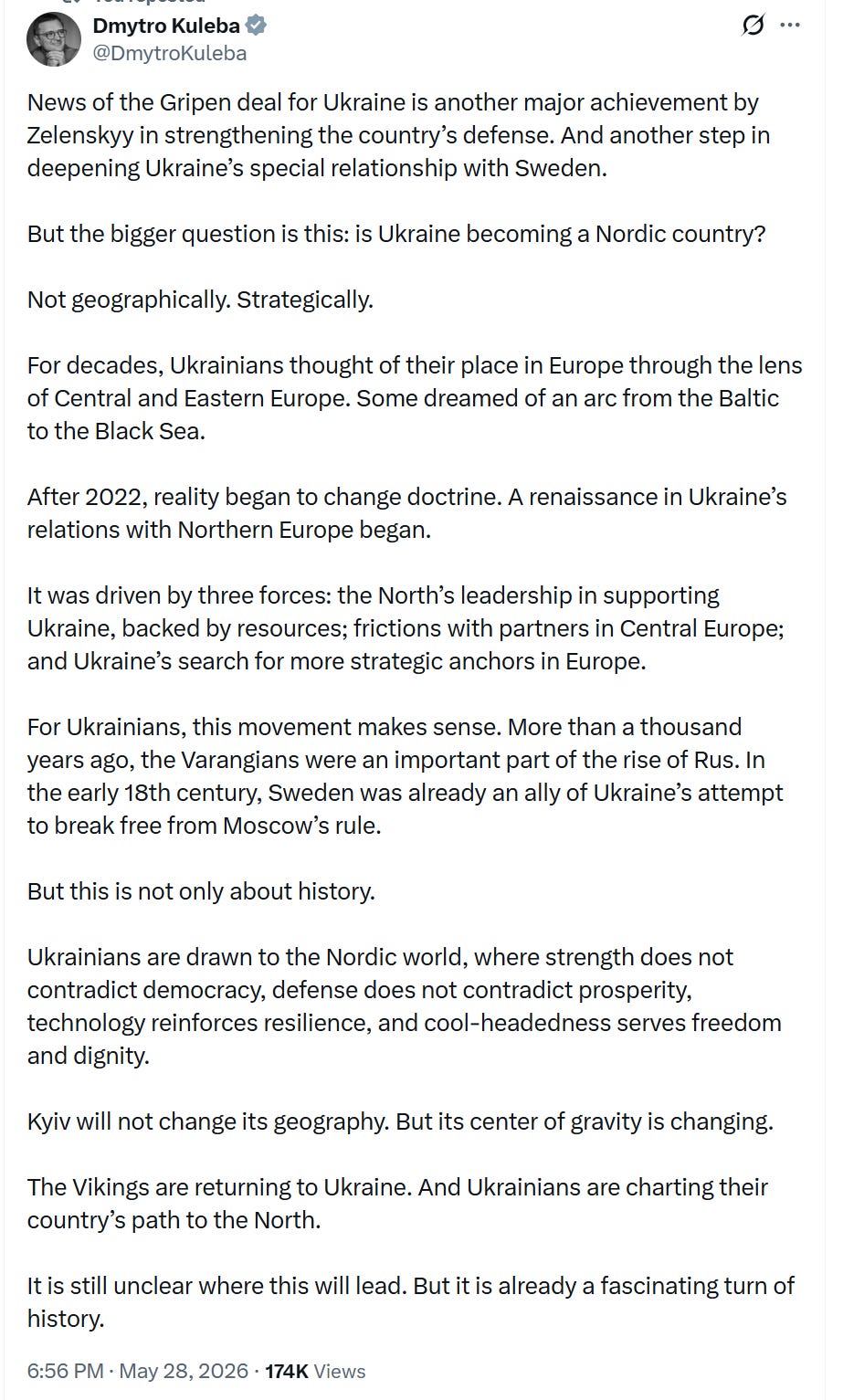
Its an interesting idea—but I would say misses a slightly larger point. It is not the Nordics who are the new driving force in European power, it could be said to be the Baltic-North sea states. The Nordics, Baltics, Poland, Germany, the Netherlands and the UK at this point are the key ones in determining whether Europe will both aid Ukraine to win the war and whether Europe will actually free itself from US strategic dominance. Here is a map of the region I am talking about.
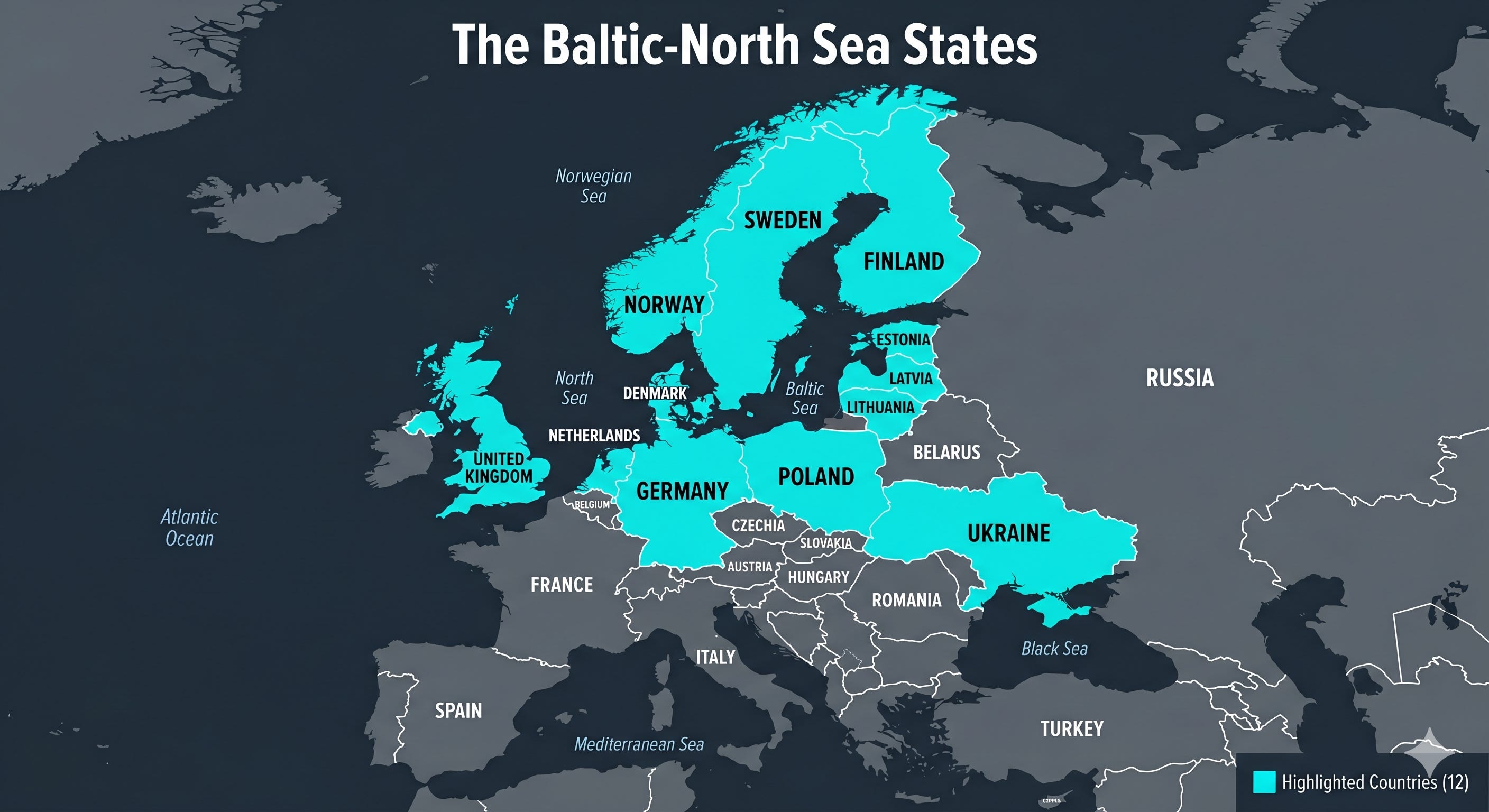
Note that Ukraine actually fits geographically into this with its long border with Poland.
These states combined have the money, technology and military capabilities to both help Ukraine and establish a new Europe. Indeed if they can get their act together, the rest of the continent will probably have to fall into line. So I am not sure I would call Ukraine a new “Nordic” state—however if it can act as part of a larger Baltic-North Sea grouping, that should be enough.
Russia Attacks Romania
The Russians attacked NATO this week. But do not worry, NATO will do nothing in response beyond issue meaningless statements. The attack happened in Rumania, when a Russian drone that was originally part of an attack on Ukraine seemed to deliberately alter course and attack the NATO country. This Russian drone hit an apartment building in the Romanian city of Galati sometime on the evening of May 28-29.
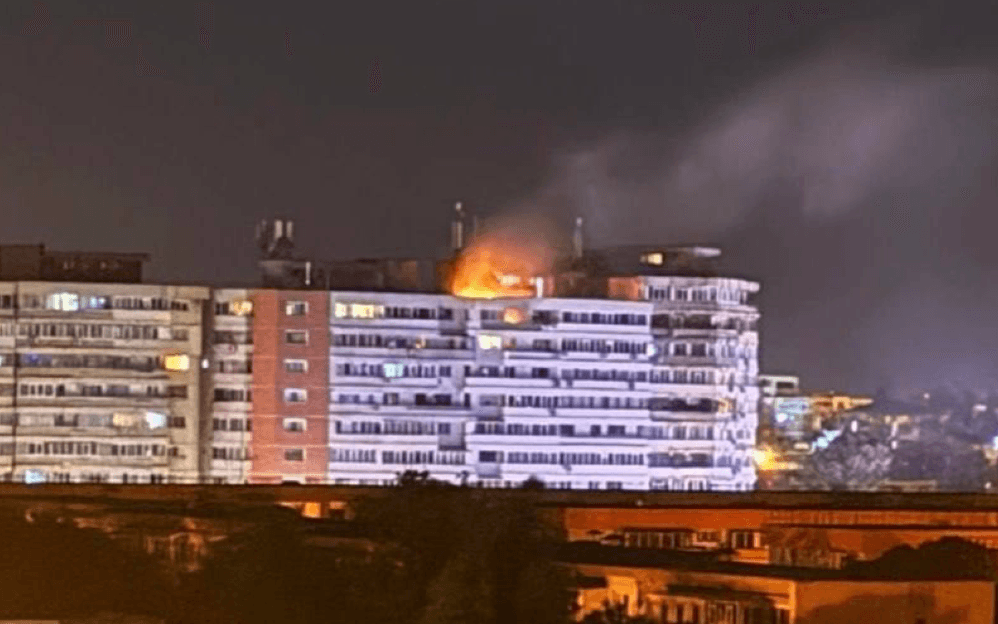
The rhetorical response by NATO was, of course, swift and decisive. It was loudly proclaimed from the top of NATO that this cannot stand.
NATO Secretary General Mark Rutte affirmed “that NATO stands ready to defend every inch of Allied territory.”
The US ambassador to NATO, Matthew Whitaker, sounded just as bellicose, claiming, “We will defend every inch of NATO territory.”
Ah, you might think, NATO is girding its loins and about to step up.
You would be wrong. All of this is lies, at least from the US perspective. The US is not committed to defending every inch of NATO territory and is openly now saying that it might not fight for the Baltics (and notably Whitaker could not even bring himself to mention Russia as the attacker in this affair). Moreover, the US is accelerating plans to pull forces out of Europe.
To show how weak the response really was, NATO has gone very quiet after the initial squawking and I am sure that fingers are being desperately crossed in the hope that the Russians do not test the alliance again.
NATO as a US-led institution is a zombie-alliance at present. It talks wonderfully, but it is a strategic disaster waiting to happen as it is led by a country that does not care about the security of its most threatened members.
This week just made that clear (again).
Have a good rest of the weekend everyone.
Bit by bit Ukraine builds its capacities. The choice for the Gripen is historical, showing the US legacy arms industry Europe can and will prevail on its own. It's so very strange to see that NATO cannot deliver what it was intended for: to engage Russia on the battlefield. It's almost unreal to watch Russia get beaten on this scale by Ukraine. It's happening through innovation and resilience, although Russia has already shown this war it can adapt to changing Ukrainian tactics. Ukraine is simply outpacing Russian innovation at the moment. Let us hope it stays that way.
Has anyone any idea what morale is like in the Russian army? I would have thought it was rock bottom given the vulnerability to Ukrainian drones. I sometimes wonder if the current situation has parallels with 1917. Finally, what are the feelings in the provinces where most of the army recruitment takes place? Families get paid large sums of money for losing their sons but is that all that matters?