A Trip To Chernihiv
Horror But Also Beauty and Joy

Hello All,

I will write more strategic analysis emerging from my trip to Ukraine in the coming days. However, I thought I might now take the opportunity to show you something different. I made a day long trip to the Ukrainian province of Chernihiv during my visit, which brought home some of the extraordinary truths of Ukraine and the war. There was the beauty and the history of the place (complete with Romanesque churches) which would normally make it a desired destination for visitors. On the other hand there was the constant tragedy of the war with reminders, some small, some enormous, wherever you looked. Beauty and Horror combined.
For those who do not know, Chernihiv is one of the most northerly oblasts in Ukraine. It shares a border with Belarus and Russia and sits above Kyiv on the map. It was thus one of the main routes for the 2022 Russian full scale invasion. Here is a map so you can see its location.
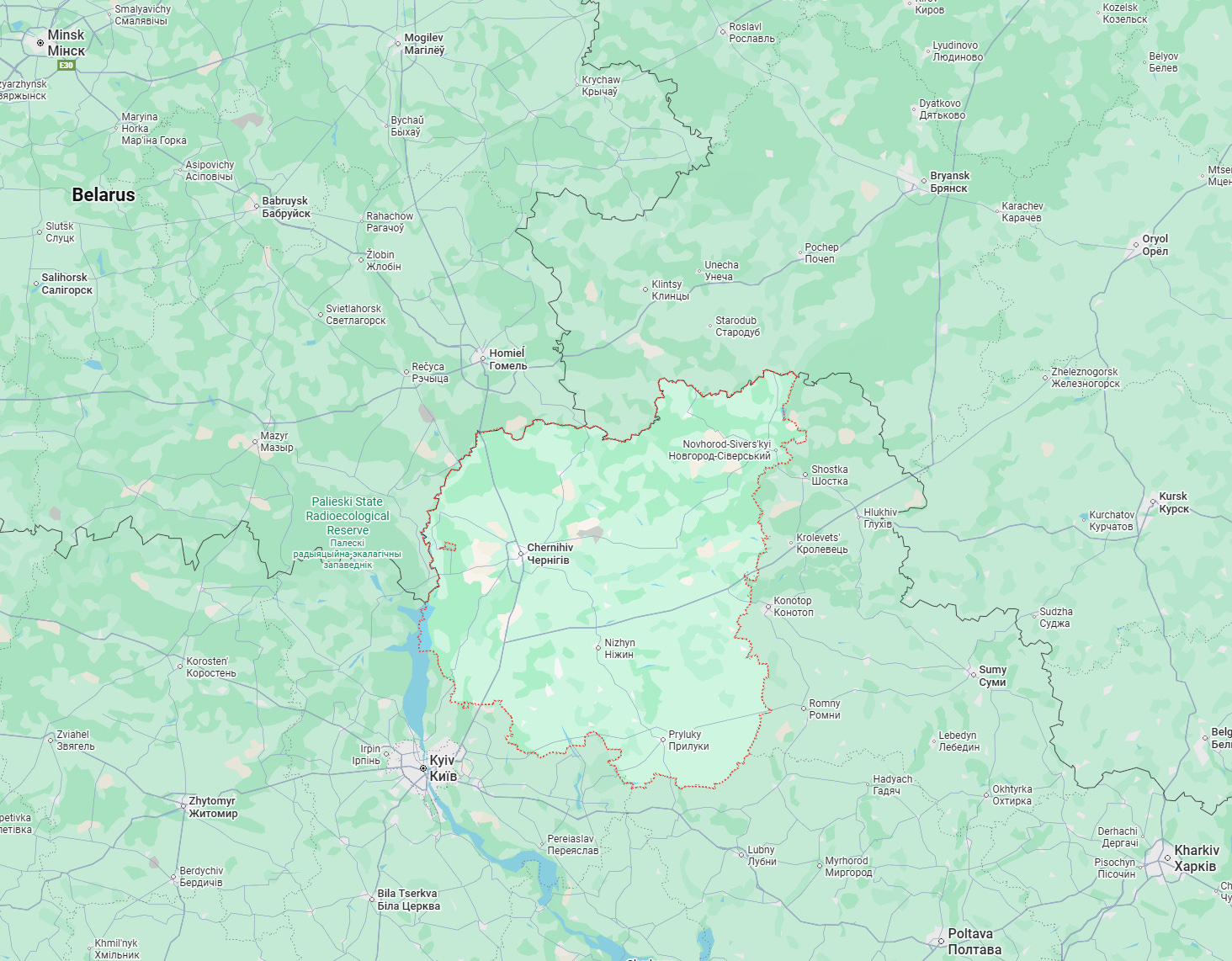
It is vast in European terms, being larger than Belgium on its own. Chernihiv is also mostly agricultural and now quite sparsely populated because of the war. It also has a beautiful and historic capital city with some of the best coffee in Ukraine (which is really saying something). In February 2022 the Russian army proceeded to invade Chernihiv Oblast from multiple directions, surrounded Chernihiv city itself as it tried to encircle Kyiv.
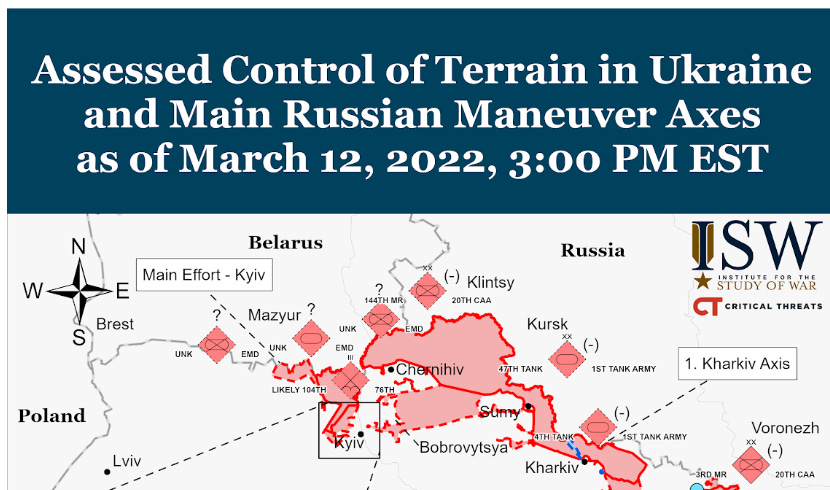
And that brings up one of the most extraordinary sights, the village of Yahidne.
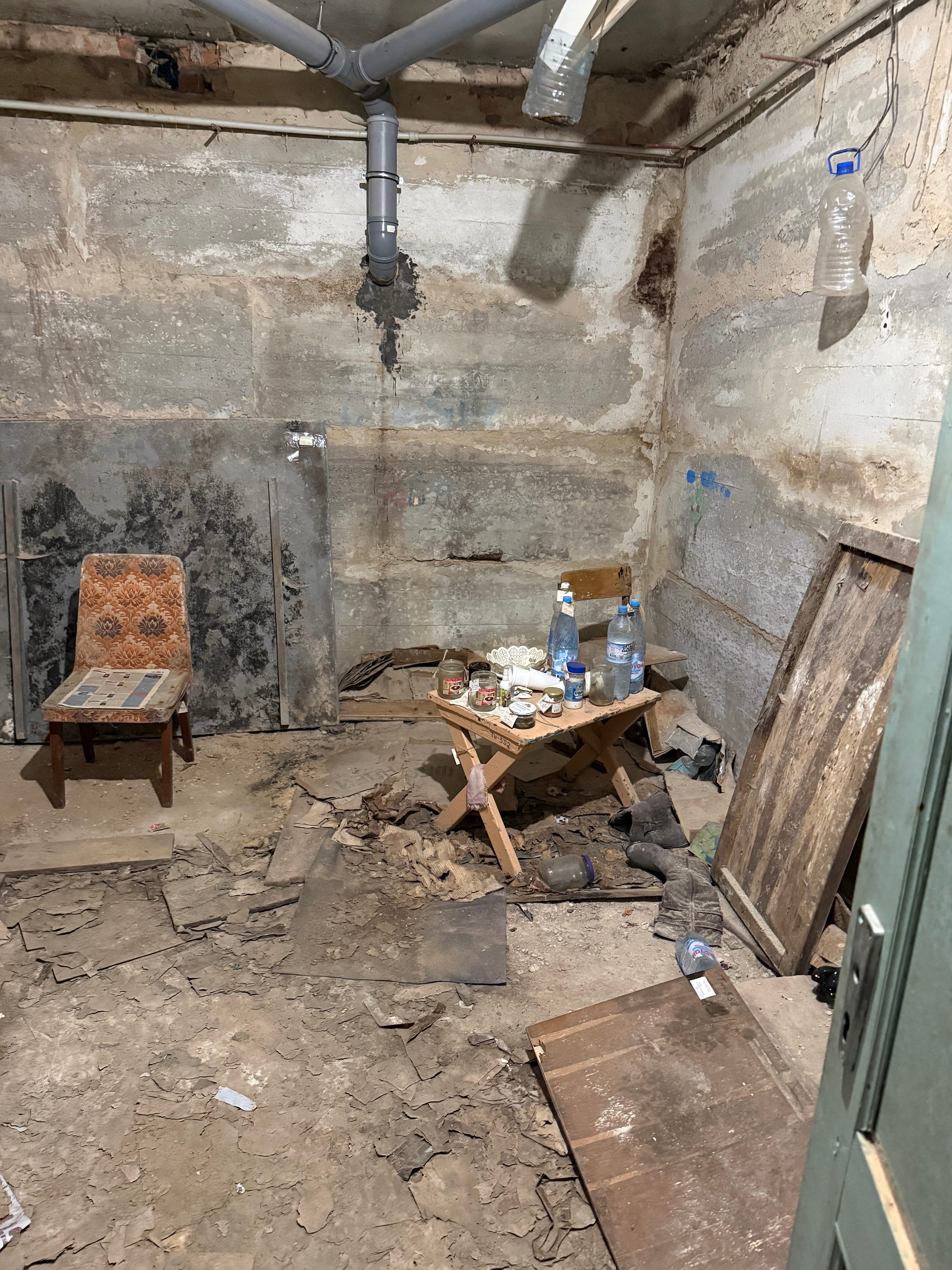
Yahidne sits in the south of Chernihiv, between Kyiv and Chernihiv city and was typical of the region. There were some pretty pre-Soviet houses, some modern concrete ones, a school, etc. However when the Russian army showed up in 2022, everything changed. What the Russians did was force practically the entire village into the dark, cramped basement of the non-descript, concrete block of a primary school.

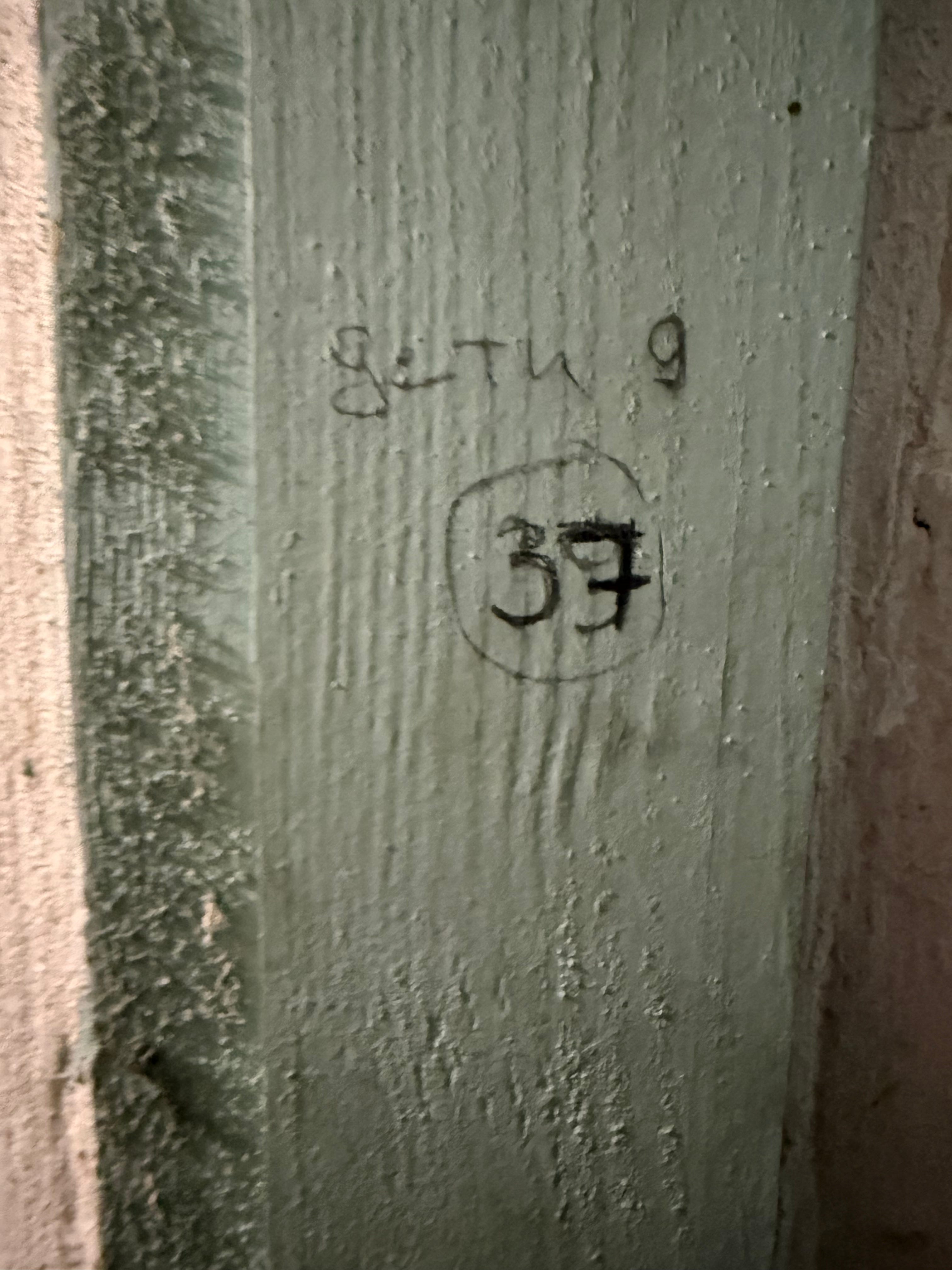
After a few days they had imprisoned more than 300 people in the school basement, in a handful of windowless rooms which were so tightly packed that even counting all the people was hard. The Russians, to help them keep track of how many people they had imprisoned, wrote the number of prisoners (and children) in chalk on the outside of each room. The small room in this picture (which actually is more than half the space available) had about 40 people in it.
Here was the Russian writing—notice how after a few people died, they reduced the number from 39 to 37 (with 9 children).
In these extraordinary cramped conditions, people either sat/lay on the floor packed like sardines, using flattened cardboard boxes for beds, or sitting in seats so close that their legs had to be intertwined. They even had to use children’s tables as was the case in this room (which had been the school gym before the war) which was the largest room where they were kept.

The picture below was one of the most poignant. The two lists on either side of the door were the names of those who had died in the cellars and those who had been shot. The door itself was covered by the villagers by a makeshift calendar, so that they could have some idea of how long they were in there.

In the end 8 townspeople were shot and another 8 lost the will to live and died. Please visit Yehidne if you go to Ukraine.
The war crimes of this village were and are being repeated in ways small and large throughout Chernihiv and the rest of Ukraine. After Yehidne, we ventured up to Chernihiv city. The center of the town, Krasna Square is dominated by a white neo-classical theater which received a direct missile attack during a theater performance in August 2023.
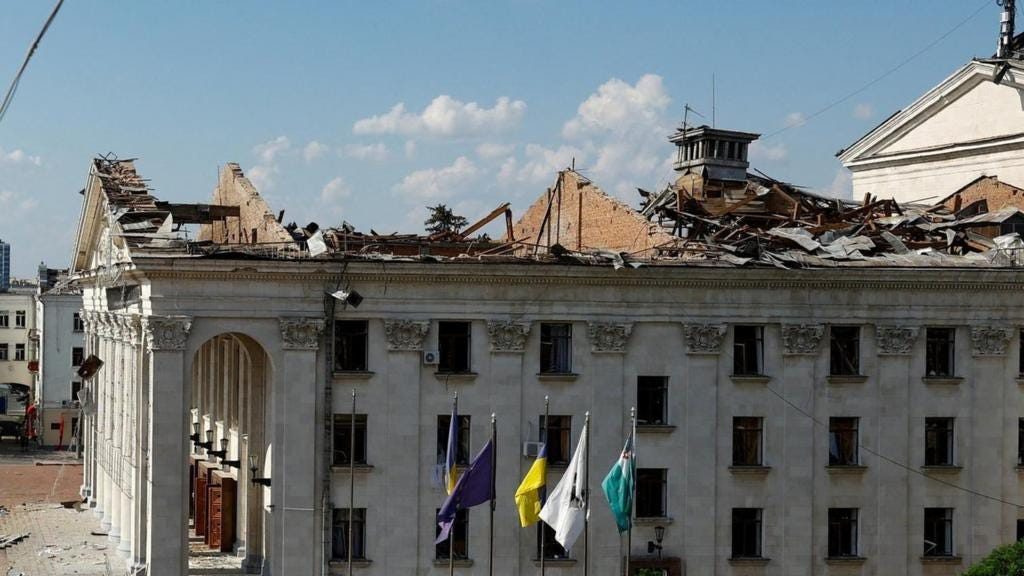
7 people were killed. You might be relieved to know that the UN was “disturbed” by this attack.
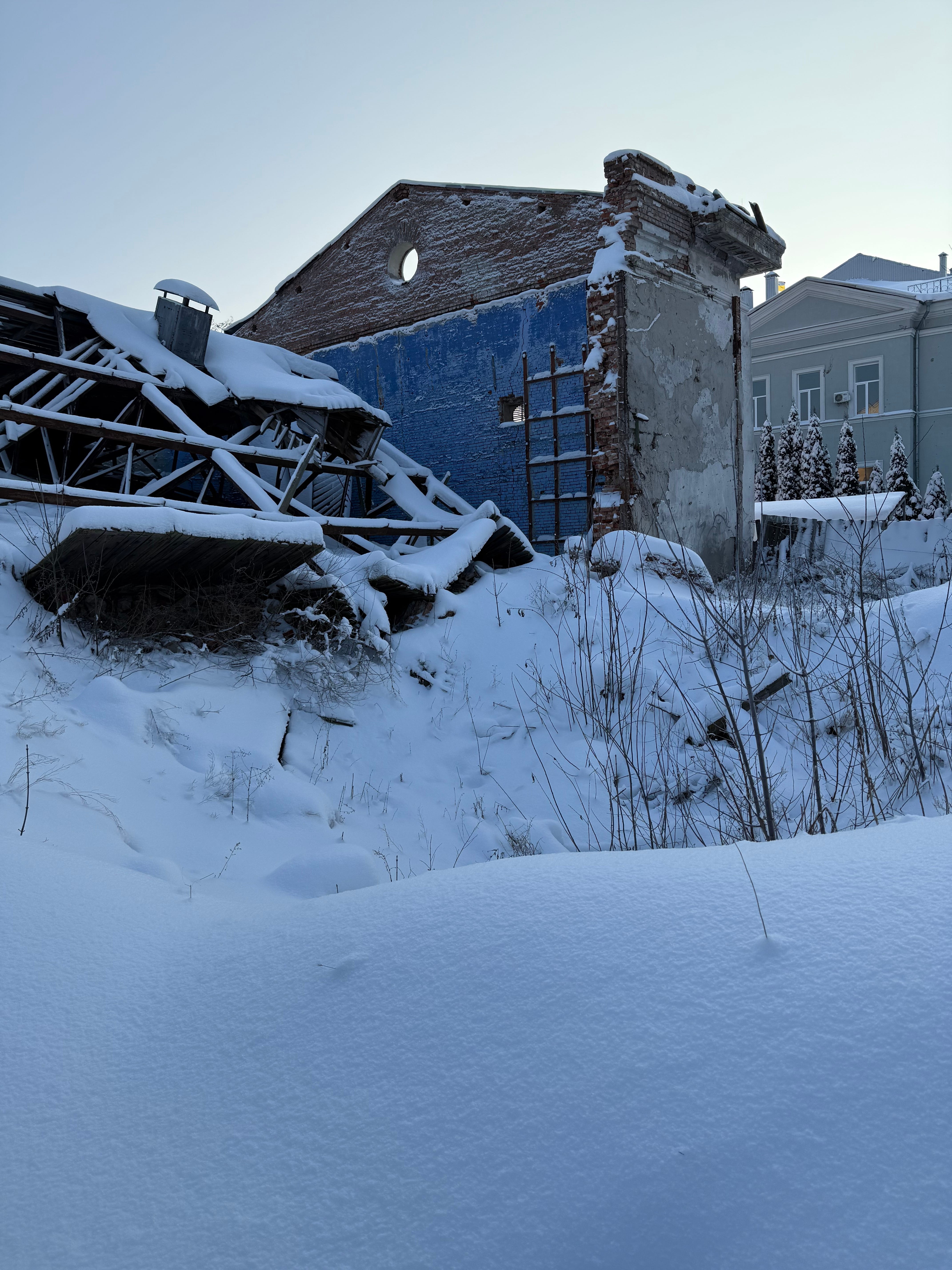
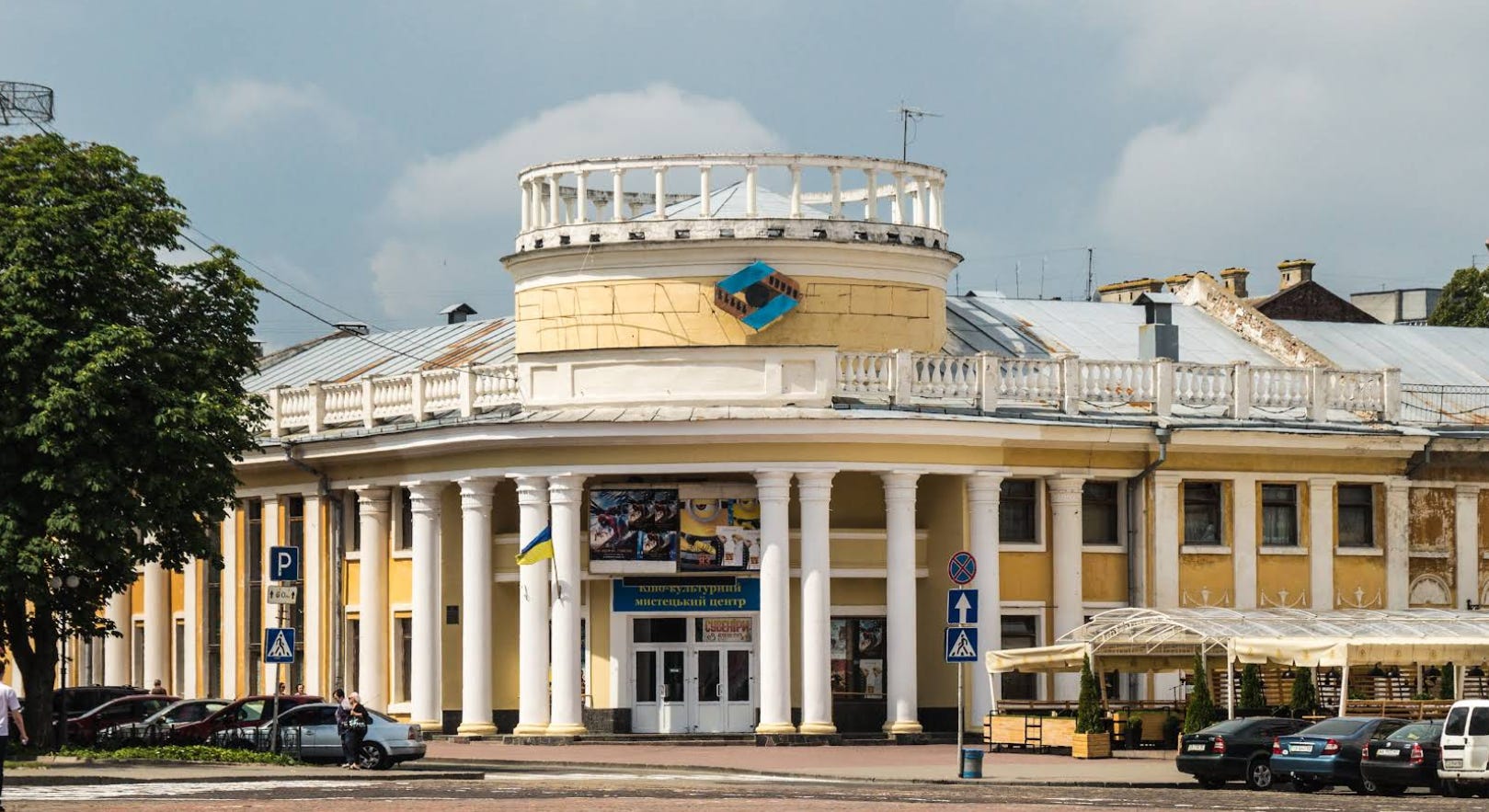
Just off the main square there a children’s centre and cinema that was devastated by a direct missile attack in 2024. The crater was so large that it was still enormous even filled with snow when we visited a few days ago. The building will have to be entirely reconstructed.
Here it was before the war.
Chernihiv is covered in such sights. The north of the oblast, right on the border and thus the sights of constant artillery and drone attacks, is now suffering in particular. Much of the population has been forced out, the forests are now off-limit as there is too much risk of land-mine detonation. The politicians are very worried about how they can rebuild and attract people back after the war. Chernihiv is an agriculturally rich area (the berries are particularly wonderful) but its very future is now being threatened.
Yet, as the war intrudes on almost everything, there were also sights of great beauty in Chernihiv—beauty in this case being accentuated by the snows that fell right before the visit. The countryside has vast vistas, with the flatness of much of the terrain giving it an almost limitless feel. Its agricultural bounty also meant that Chernihiv was one of the most important places in Kyivan Rus. Indeed, as people from Chernihiv point out with gusto, construction on their medieval cathedral, the Transfiguration, actually started in the early 11th century, before that of St Sophia in Kyiv.
St Sophia was however completed before the Transfiguration, so which is older is up to you to decide.
One thing that the Transfiguration has is a great deal of its original external Romanesque stonework—which is wondrous. The beauty of the Romanesque Byzantine style shines through. The red brick parts of the exterior in the picture below are exposed original construction. You can see just how elaborate a building this was for the 1100s; far finer than most cathedrals in western Europe at the same time. These pictures are high resolution, so you can look closely if you want.
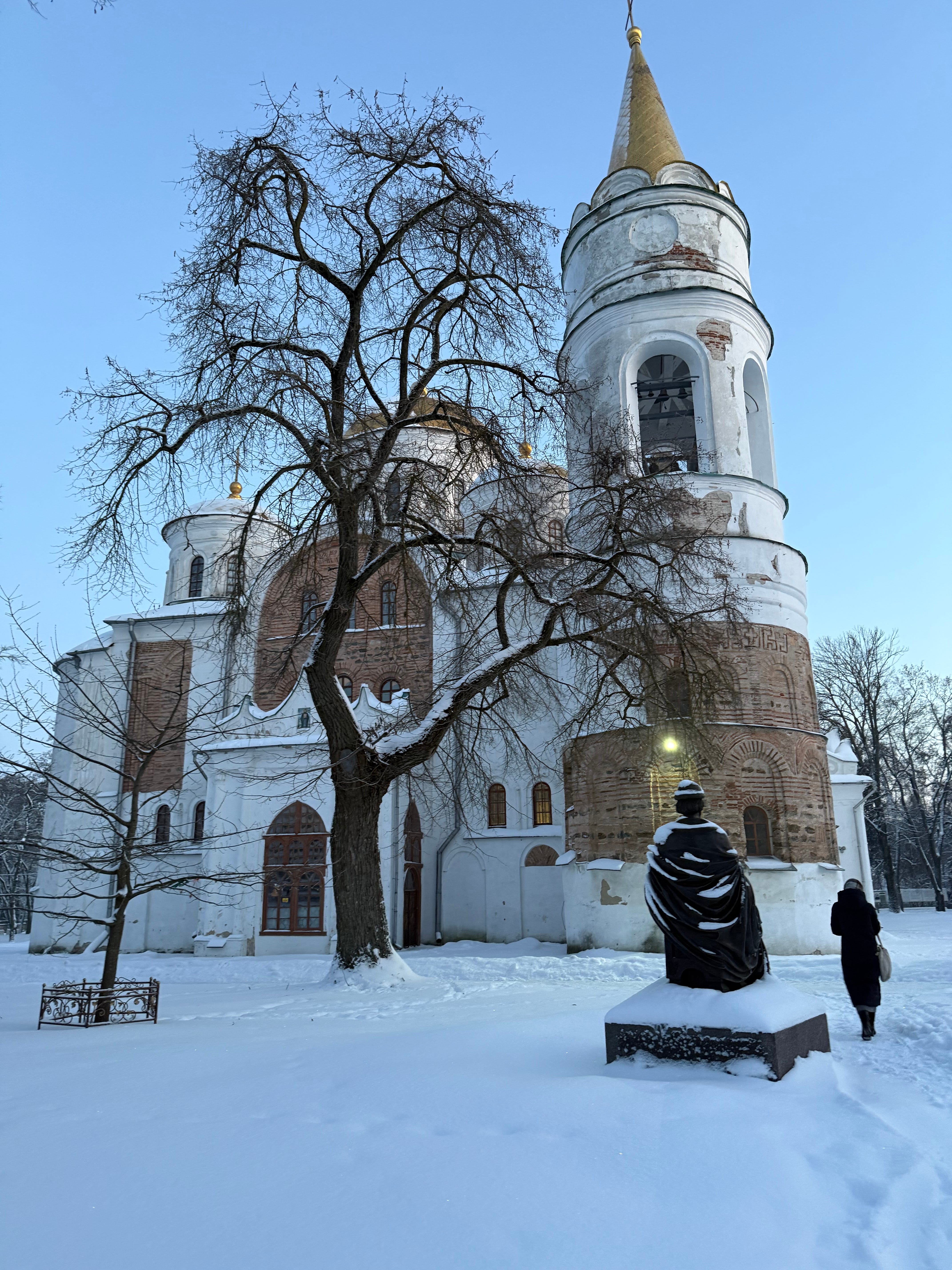
Sadly, most of the interior was destroyed in a 18th century fire, but even then, there are wonderful traces of the medieval beauty. My favorite was this original 11th century column, which had to be supported in the 18th century, but which was partially uncovered.

The people of Chernihiv also seemed determined not to let the horrors of war define them. One of the most wonderful sights combined the beauties of the old architecture with the joy of living. This winter is the first for years with deep snow falls. It brought out families in large numbers and many young chidren had their first experience of sledding in the snow—often right in front of the historic sights. It was joyous and from this picture you might get an idea of the squeals of laughter we could hear.

I am not going to try and sum up Chernihiv in a sentence or two—because I cannot. All I can say is that visiting such places is important. This is a community that wants to live, has a rich history and should have great future. It is defined by war now but does not wish to be so in the future.
Thank you.
More people should see this and understand why Ukrainians fight for their country.